





Decks Built for Cape Cod Yards
Composite, PVC and cedar decks from a crew that has set footings in Cape sand for twenty years, with permits, Conservation Commission filings and flood-zone rules handled for you.
Who builds decks on Cape Cod?
Coast Carpentry Home Group is a Cape Cod deck builder based at 14 Parker Rd in Osterville. We design and build new decks, rebuild failing ones, and add stairs, railings, pergolas and screened porches for homeowners in all fifteen towns of Barnstable County. Our own carpenters do the work, we pull the building permit, and when a deck sits near a marsh, pond or coastal bank we handle the Conservation Commission filing before a shovel goes in.
Every kind of deck a Cape house asks for.
Most calls start with one of these six. If yours is different, call anyway. Our carpenters have built decks on cottages, shingle-style houses and 1970s ranches alike.
New composite and PVC decks
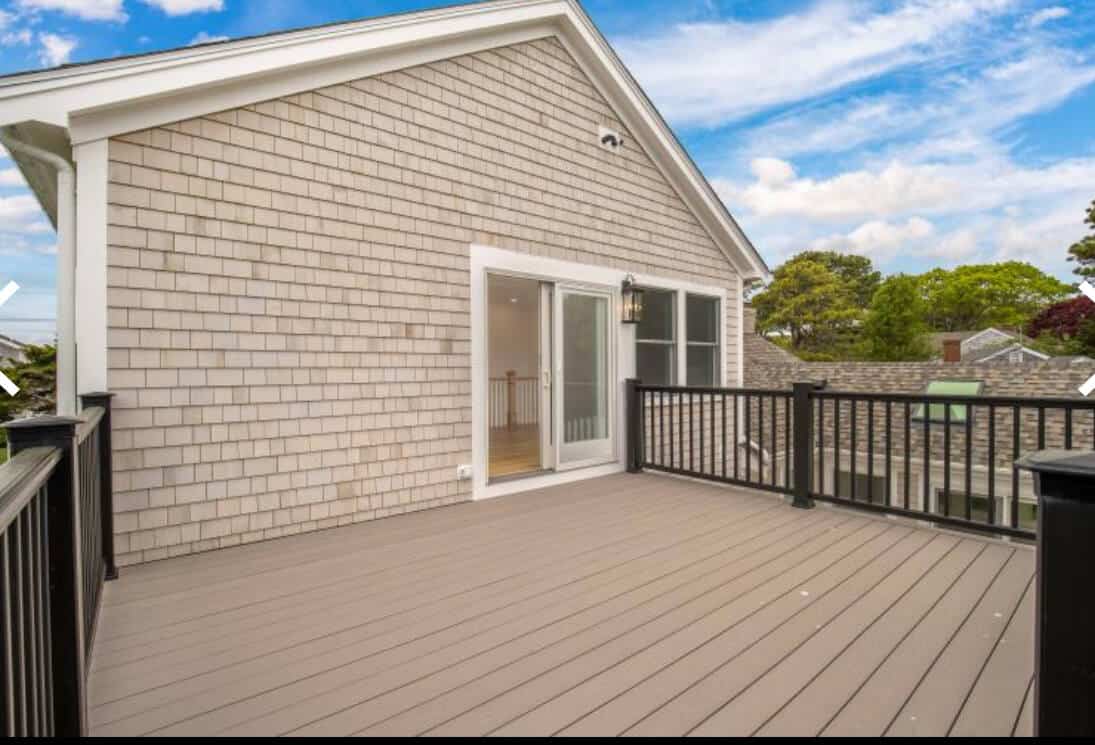
Capped composite and cellular PVC boards hold their color through salt spray and August sun, and they never need a sealer. We frame them on pressure-treated lumber with stainless or hot-dipped galvanized fasteners rated for coastal use.
Cedar and wood decks
Some houses want real wood. We build cedar and treated-lumber decks with proper board spacing, flashing at the ledger and a finish schedule you can actually keep up with on the Cape.
Deck replacement and rebuilds
A deck past its life usually shows it at the ledger, the stair stringers and the post bases. We tear off, inspect the house framing behind it, repair rot and rebuild to today's code.
Stairs, railings and lighting
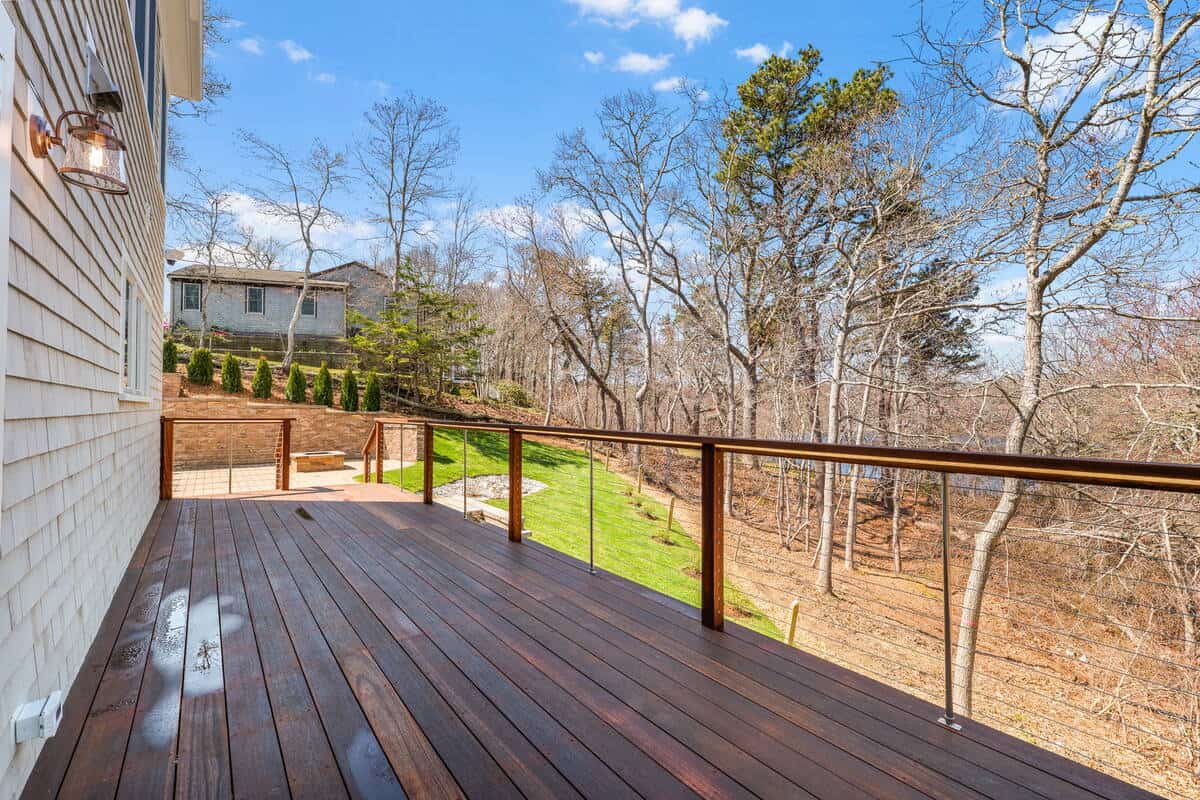
Cable rail for a water view, composite balusters for low maintenance, or painted wood for a traditional Cape. Code-compliant guards and graspable handrails on every set of stairs.
Screened porches and pergolas
A screened porch earns its keep from May to October on the Cape, when the greenheads and mosquitoes decide the evening. We also build pergolas, privacy screens and built-in benches.
Multi-level and waterfront decks
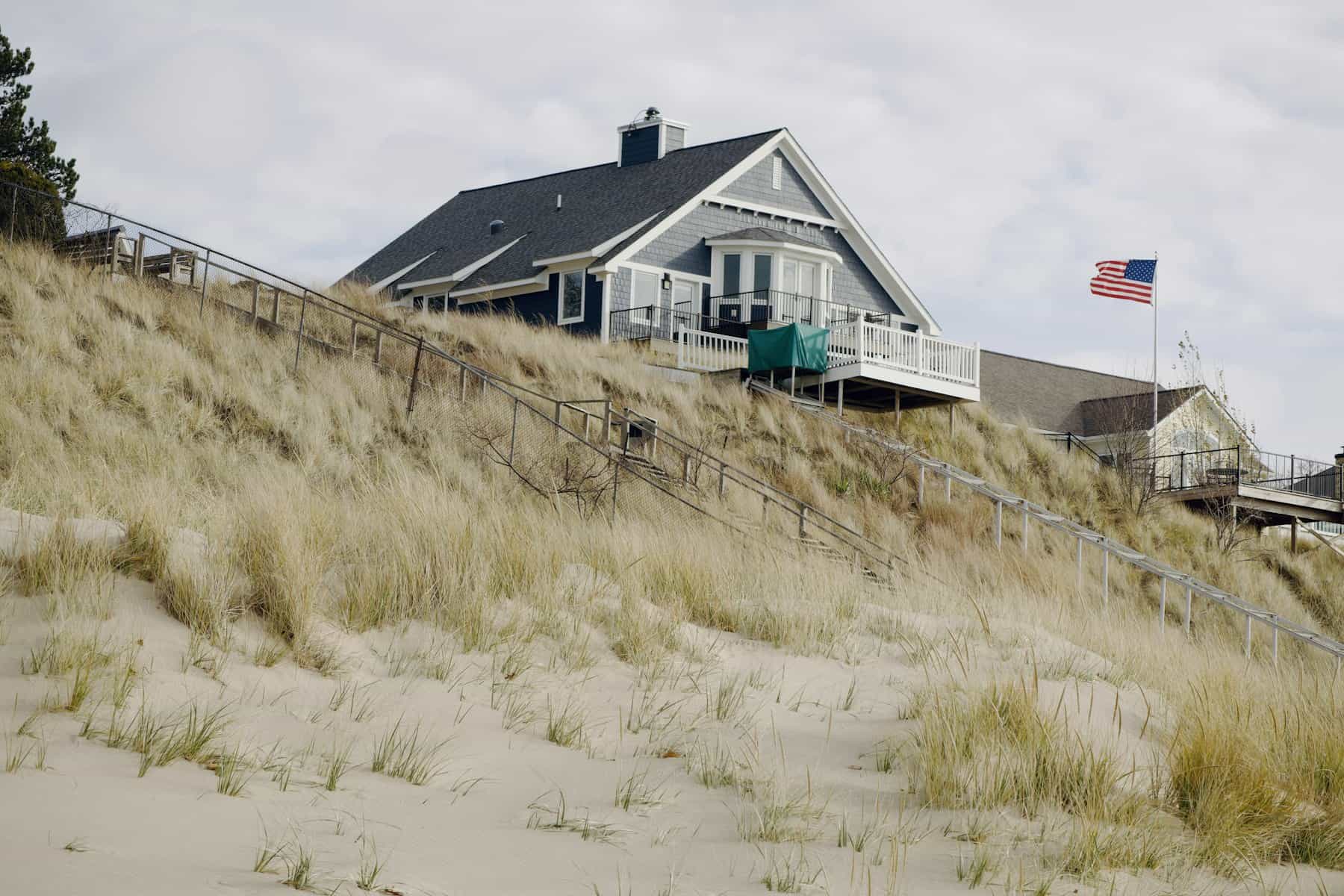
Sloped and dune lots need stepped platforms, taller posts and engineered connections. We design around the grade and the view and keep the footings where the code and the ConCom want them.
Same crew, related work on Cape Cod: Masonry patios and walkways →Landscaping →Home additions and porches →Painting and staining →
Sand, salt and a town board. Three things a Cape deck has to get right.
Cape Cod sits on a glacial outwash plain, so most yards are sand a few inches under the topsoil. Sand drains well, but it does not hold a footing the way clay does. We dig below the frost line, set footings on compacted base and size them for the actual load, because a deck that heaves in February is a deck that was built on a guess.
Salt is the second problem. Within a mile or two of Nantucket Sound or Cape Cod Bay, ordinary zinc hardware pits and stains within a few seasons. We use stainless steel or hot-dipped galvanized connectors and fasteners on every coastal deck, flash the ledger with a membrane that will not react with treated lumber, and leave the gaps a deck needs to dry out after a nor'easter.
The third is the paperwork. Decks within 100 feet of a wetland, pond or coastal bank fall under the Conservation Commission, and waterfront lots in a FEMA flood zone carry their own rules about posts and breakaway construction. Every town from Bourne to Provincetown handles this a little differently. We have filed in all of them, so you do not have to learn the process on your own project.
Deck building across Barnstable County.
We are based in Osterville, in the town of Barnstable, and we build decks in every Cape town. Here is what changes as you move along the peninsula.
Upper Cape
Bourne, Sandwich, Falmouth and Mashpee. Canal-side and Buzzards Bay lots catch the hardest southwest wind. Mashpee's pond and marsh lots are the most common ConCom filings we make for decks.
Deck builder in Mashpee →Mid-Cape
Barnstable's seven villages, Yarmouth and Dennis. Our home turf. Hyannis, Centerville, Osterville and Cotuit on the Sound side; Barnstable Village, Yarmouth Port and Dennis Village on the bay side, where the Old King's Highway district reviews anything visible from Route 6A.
Lower Cape
Harwich, Brewster, Chatham and Orleans. Chatham and Harwich Port waterfront decks often sit in velocity flood zones, which changes how we set posts and connect the frame.
Outer Cape
Eastham, Wellfleet, Truro and Provincetown. Exposed lots, salt from both sides and strict Seashore and dune rules. We schedule these builds around the summer traffic on Route 6.
Serving Cape Cod only. We do not build on Nantucket, Martha's Vineyard or off-Cape. Shop and office: 14 Parker Rd, Osterville, MA 02655.
From first visit to first cookout.
Site visit
We walk the yard, check the grade, the house framing where the ledger will land, and whether any wetland or flood line touches the plan.
Design and quote
A drawing with sizes, materials and railing options, plus a written quote. No pricing on this page because every deck is sized to its yard.
Permits
We file the building permit and, when needed, the Conservation Commission notice. Timing depends on the town's hearing calendar.
Build
Footings, framing, decking, rail, stairs. Our own carpenters, on site every working day until it is done.
Final inspection
The town inspector signs off, we walk it with you and leave a care sheet for the material you chose.
Questions Cape homeowners ask before they build a deck.
Do I need a permit to build a deck on Cape Cod?+
What decking holds up best in salt air?+
How long does a deck build take?+
Can you repair my deck instead of replacing it?+
Do you build decks on waterfront and flood-zone lots?+
What time of year is best for a Cape Cod deck?+
Which towns do you build decks in?+
Written by the crew that does the work.
Tell us about the yard. We will tell you what the deck should be.
A free site visit from an Osterville crew, a drawing you can react to, and a straight answer on permits before you commit to anything.
Nothing is required, but any of these help:
- A photo of the back of the house
- Rough size or the space you want to cover
- Any plot plan showing wetlands or property lines
- Material preference, if you have one